Who can buy what in Thailand?
Ownership rules depend on who is buying and what is being bought. For condominiums, the Condominium Act allows foreign individuals to hold units freehold, provided that total foreign ownership in the building does not exceed 49% of the total floor area of all units and the purchase money is brought into Thailand in foreign currency.[1] Land is different: under the Land Code, foreigners generally cannot acquire land, and the exceptions are narrow.[2]
| Buyer | Condominium unit | House | Land |
|---|---|---|---|
| Thai individual | Freehold | Freehold (house and land) | Freehold |
| Foreign individual | Freehold within the 49% foreign quota, or leasehold | Building can be owned; land usually leased (max 30 years) | Generally not permitted; leasehold (max 30 years) |
| Thai company (majority Thai-owned) | Freehold | Freehold | Freehold |
| Foreign-controlled company | Freehold within the foreign quota | Only with specific promotion (e.g. BOI) | Only with specific promotion (e.g. BOI) |
Legal position as summarised in September 2026 · Updated 28 Sept 2026 · Sources: [1] [2]
Simplified summary, not legal advice. Structures that use Thai nominees to hold land for a foreigner are illegal.
The buying process, step by step
- Define the brief. Own use, rental income or long-term hold? The answer changes which areas, building ages and unit types make sense.
- Confirm eligibility and funding. Foreign buyers should plan how the money will arrive in Thailand in foreign currency and how the bank will document it. Thai buyers using a mortgage should obtain a pre-approval.
- Shortlist and compare. Compare asking prices with recent resale asking prices in the same building and nearby, not only with the developer's launch price.
- Due diligence. Check the title deed and any encumbrances at the Land Department office, the juristic person's accounts and outstanding fees for a condominium, and permits and access for a house or land.
- Reservation and contract. A reservation deposit holds the property; the sale and purchase agreement should set out the price, deposit, transfer date, who pays each fee and what happens if either side defaults.
- Transfer at the Land Department. Buyer and seller (or their representatives with a Land Department power of attorney) register the transfer, pay fees and taxes, and the title is endorsed to the buyer on the day.
- After transfer. Register with the juristic person (condominium) or utilities, update the house registration where applicable, and diarise the annual Land and Building Tax.
What does buying cost? Transfer fees and taxes
Four charges are collected at the Land Department on the day of transfer. The transfer fee is based on the official appraised value; specific business tax and stamp duty are based on the higher of the appraised value and the registered sale price.[3] Specific business tax is 3% plus a 10% local surcharge, which is why it is usually quoted as 3.3%.[4]
| Expense | Rate | Calculated on | Customarily paid by | Notes |
|---|---|---|---|---|
| Transfer fee | 2% | Appraised value | Often split 50/50 | Negotiable. 0.01% for eligible Thai buyers until 30 June 2027. |
| Specific business tax | 3.3% | Higher of appraised value or sale price | Seller | Applies when sold within 5 years of acquisition (exemptions apply, e.g. seller in house registration for 1 year). |
| Stamp duty | 0.5% | Higher of appraised value or sale price | Seller | Payable only when specific business tax is not. |
| Withholding tax | Varies (individual); 1% (company) | Appraised value (individual); higher of appraised value or price (company) | Seller | For individuals it depends on years of ownership. |
| Mortgage registration fee | 1% | Loan amount | Buyer | 0.01% for eligible Thai buyers, loans up to THB 7M, until 30 June 2027. |
Rates as reported in 2026 · Updated 28 Sept 2026 · Sources: [3] [4] [5]
| Item | Assumption / calculation | Amount (THB) |
|---|---|---|
| Sale price | Agreed price | 6,500,000 |
| Appraised value | Assumed for this example | 5,000,000 |
| Transfer fee (standard) | 2% × 5,000,000, split 50/50 | 100,000 (buyer 50,000) |
| Transfer fee (eligible Thai buyer) | 0.01% × 5,000,000 | 500 |
| Specific business tax | 3.3% × 6,500,000 (seller owned 3 years, not in house registration) | 214,500 (seller) |
| Stamp duty | Not payable because specific business tax applies | 0 |
Illustrative figures, not a quote · Updated 28 Sept 2026
Withholding tax is excluded because it depends on the seller's circumstances. The Land Department calculates the actual amounts on the day.
New condominium or resale?
Buying off-plan from a developer usually means a deposit and instalments during construction, with the balance paid at transfer once the building is registered. Resale units can be inspected, rented comparables are already visible, and transfer can happen within weeks.
What should you check before making an offer?
- Title and encumbrances. A Chanote (Nor Sor 4 Jor) is the strongest land title. Check for mortgages, leases or servitudes registered against the property.
- Seller's authority. Is the person you are dealing with the registered owner, or authorised to act for them?
- For condominiums: outstanding common-area fees, the sinking fund balance, planned special levies, building rules on pets and short-term letting, and — for foreign buyers — current foreign-quota availability.
- For houses and land: legal road access, the zoning of the plot, flood history, and whether the building has the permits its current use requires.
- Condition. An independent inspection of a resale unit or house is inexpensive relative to the purchase price.
- Total cost. Transfer costs, furnishing, and the first year of common fees and tax.
Documents usually required at transfer
- Passport or Thai ID card, and house registration book for Thai buyers.
- For foreign buyers of a condominium: evidence that the funds were remitted from abroad in foreign currency, issued by the receiving Thai bank.[1]
- The original title deed (the seller brings it).
- For a condominium: the juristic person's debt-free letter and, for a foreign buyer, confirmation of foreign-quota availability.
- Spousal consent or marriage documents where applicable, and a Land Department power of attorney if someone signs on your behalf.
What does it cost to own afterwards?
Condominium owners pay common-area fees (set per square metre by each building) and usually a one-off sinking fund contribution at purchase. All owners are subject to the annual Land and Building Tax, assessed by the local authority.
| Use | Value band (THB) | Annual rate |
|---|---|---|
| Primary residence — building only (e.g. condominium), owner in house registration | Up to 10M | Exempt |
| Primary residence — building only | 10M–50M | 0.02% |
| Primary residence — land and building | Up to 50M | Exempt |
| Other residential (second homes, rented units) | Up to 50M | 0.02% |
| Other residential | 50M–75M | 0.03% |
Tax year 2026 (B.E. 2569) · Updated 28 Sept 2026 · Sources: [7]
Selected bands only. Values are based on the official appraisal for the 2023–2026 cycle.
Properties for sale in the collection
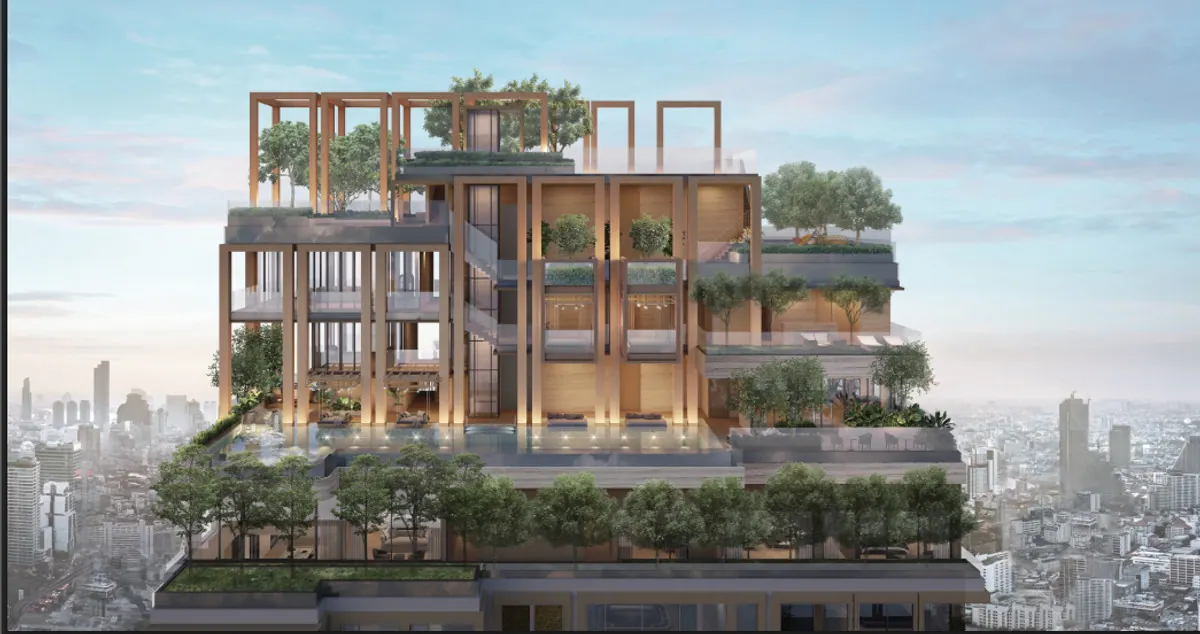 For SaleNew
IN68001 · Condominium
Romm Convent
Silom – Sala Daeng – Bang Rak · 2 Bed · 2 Bath · 128.72 sqm
฿30.9M
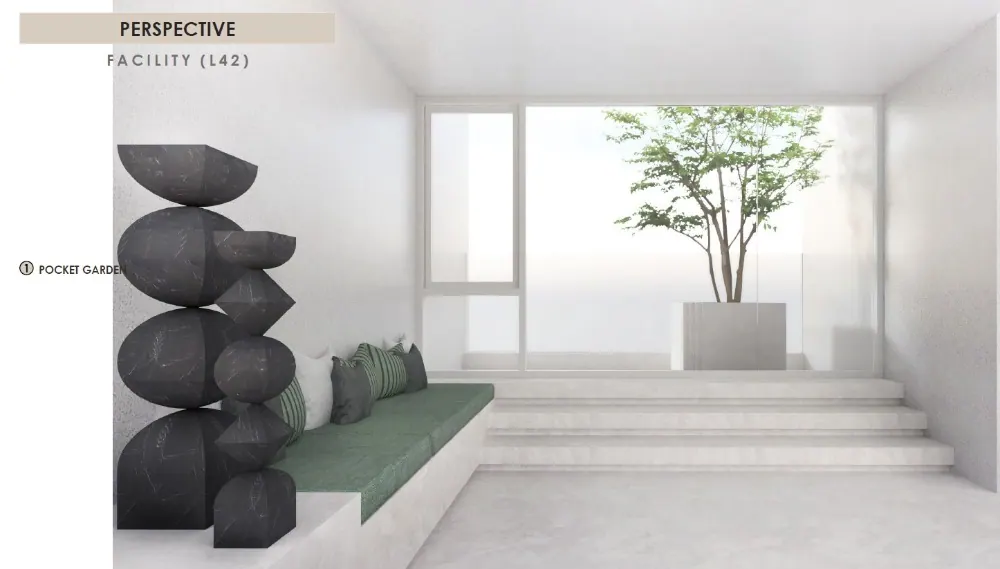 For SaleNew
IN68002 · Condominium
Reference Ekkamai
Sukhumvit – Asoke – Thonglor · 3 Bed · 3 Bath · 147.43 sqm
฿31.9M
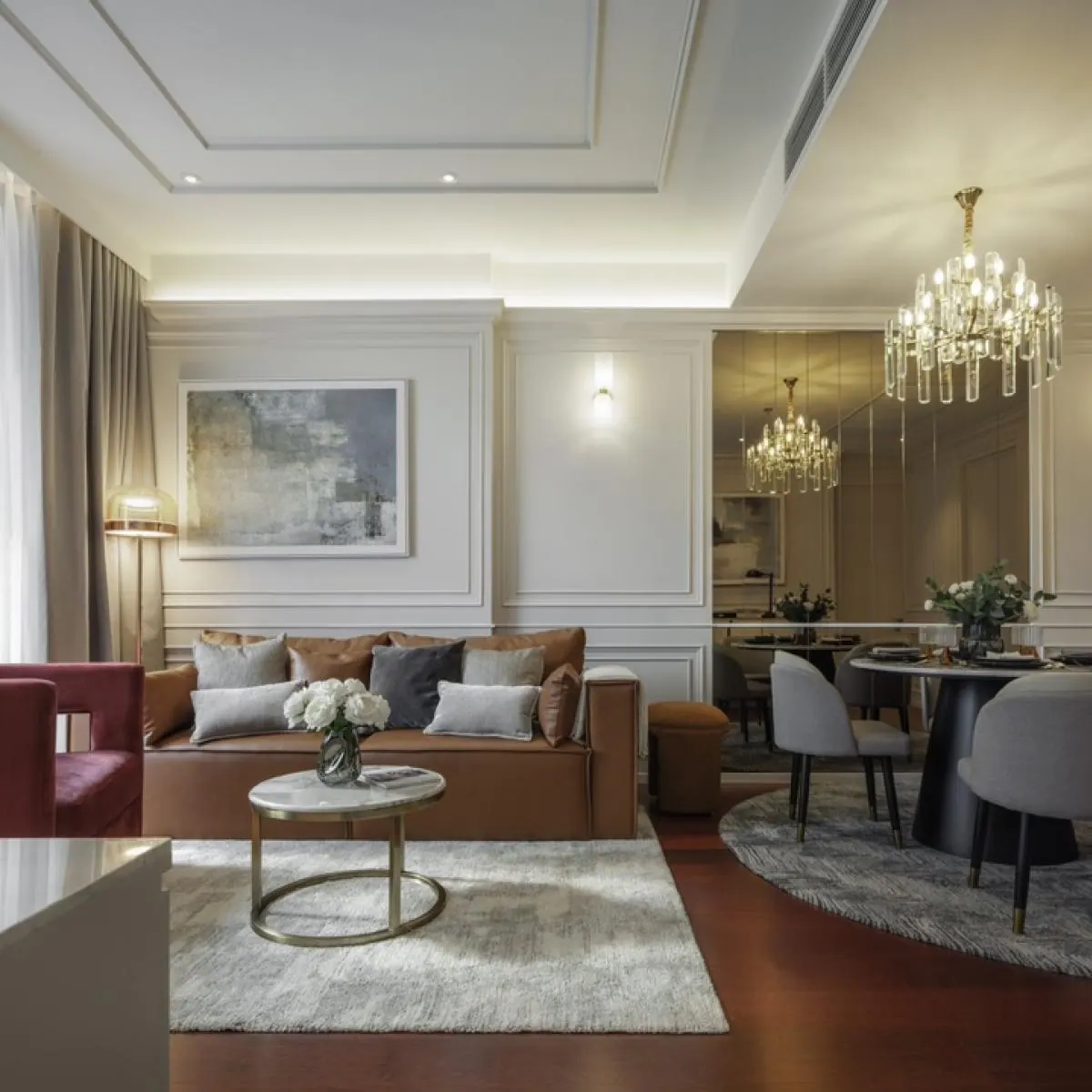 For Sale
IN68003 · Condominium
Khun by yoo Sansiri
Sukhumvit – Asoke – Thonglor · 2 Bed · 2 Bath · 82 sqm
฿32.5M